My Role
Founding Product designer

Vendor Analysis - Anomaly detection with Intelligent layer
Problem
The exceptions that do not
look like errors
A miscoded transaction sits in the ledger looking like a correct one, and a vendor that went quiet this month leaves nothing behind at all. So the accountant works vendor by vendor across months, usually in an exported pivot, leaning on memory of how each vendor normally behaves. It is slow, and requires direct manipulation of data in ERP systems like quickbook.

Manual entry in Vendor profile in ERP systems like Quickbook
Solution
Providing relevant context with
past vendor behavior
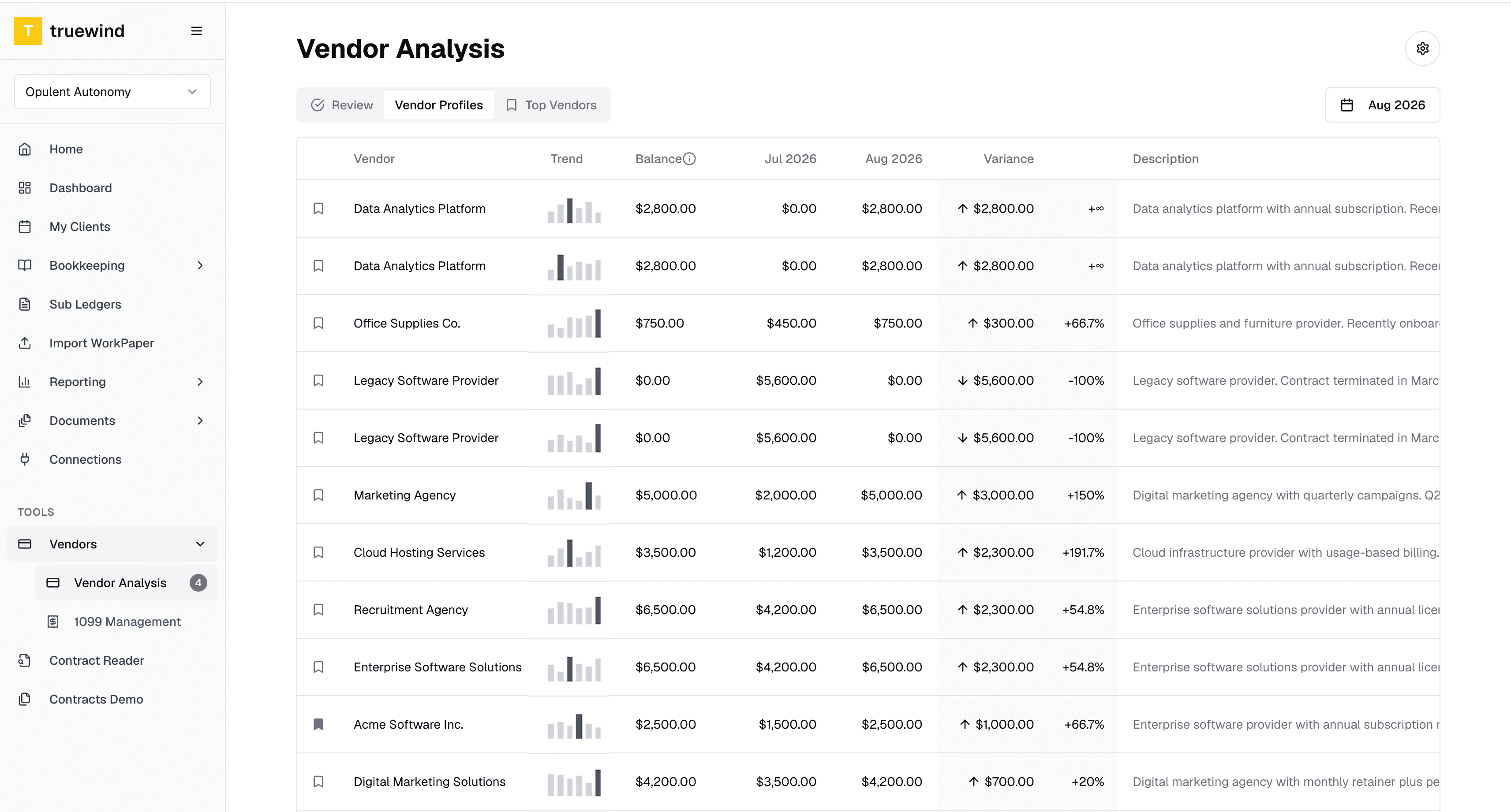
Vendor Profiles established necessary context to understand whether something was an issue or not vs an exception list for each vendor. Accountants could view vendor behavior in minutes, which made identifying exceptions reliably easier. Not all vendors are equal so marking top vendors in the app helped monitoring vs scanning them in a spreadsheet.
Provide relevant suggestions
to issues or errors
The Vendor Analysis provided relevant context and agentic suggestions for review. Accountant could easily compare and correct issues quickly by accepting or ignoring changes. Suggestions could be modified by accountants which provided more control and helped the agent learn.

Show the evidence, not the
confidence score
Providing visibility into on past transactions helped accountants understand miscategorization issues highlighted. They can make confident decisions based on past transaction categorization. Audit Trail provided record of decisions for better transparency

Accountants need to verify suggestions before accepting them
Vendor analysis was shaped around one question, what does this person need to see before they are comfortable resolving the anomaly. Once we answered that, adoption was instant.
30%
reduced time reviewing exceptions
Behavioral Impact
45%
of suggestions actioned vs skipped